
Naronapride eases gastroparesis symptoms in phase 2 trial
In a phase 2b trial, naronapride — an investigational dual-action prokinetic given at 20 or 40 mg three times daily for 12 weeks — led to significantly greater improvement in core symptoms…
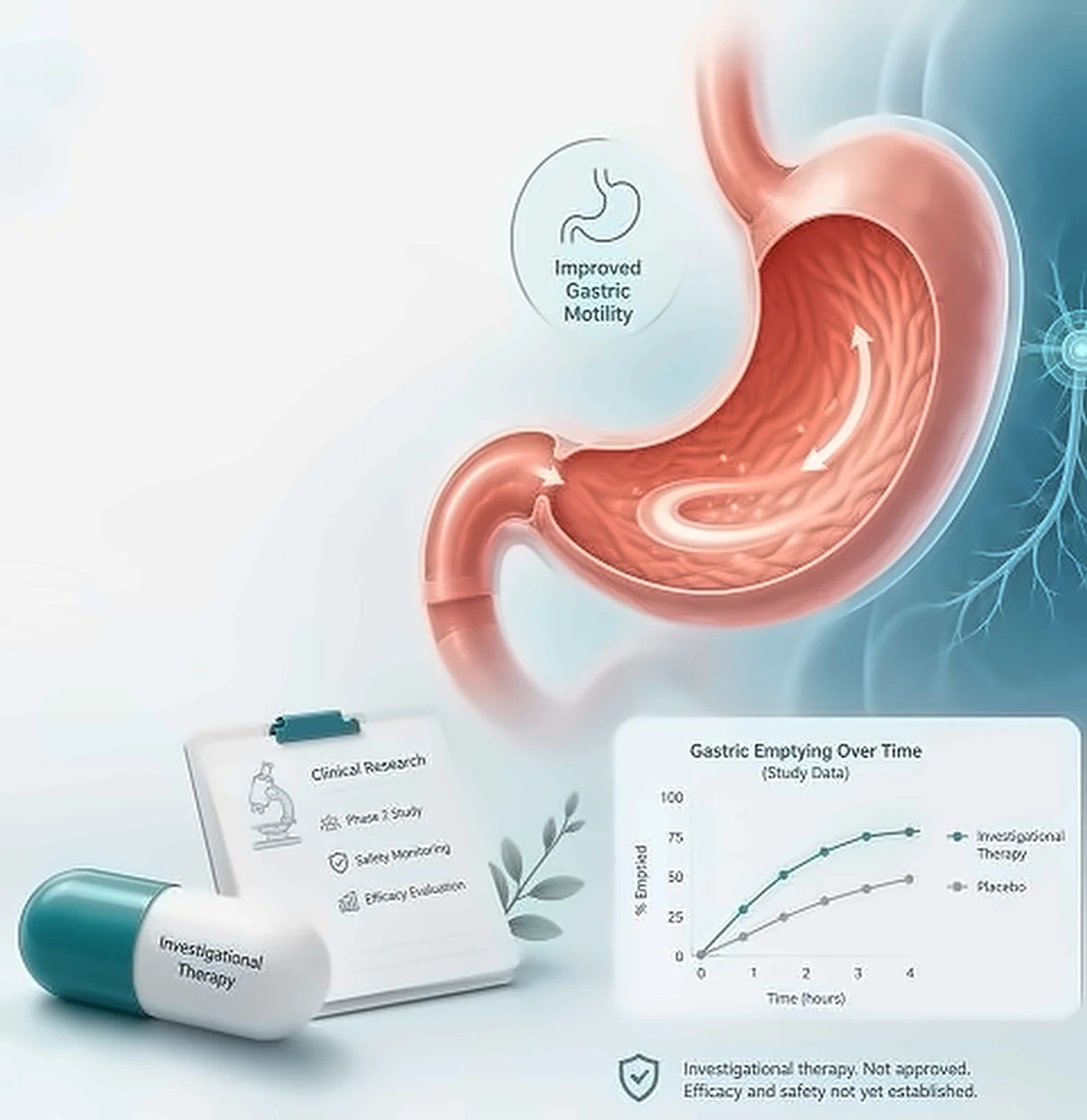
In a phase 2b trial, naronapride — an investigational dual-action prokinetic given at 20 or 40 mg three times daily for 12 weeks — led to significantly greater improvement in core symptoms than placebo in patients with idiopathic or diabetic gastroparesis. Quality of life also improved significantly at these doses, and naronapride was generally well tolerated.
Gastroparesis prevents the stomach from emptying normally, causing persistent nausea, fullness and upper abdominal pain, with a growing impact on quality of life as symptoms worsen. Naronapride is designed to act locally in the gut, stimulating serotonin receptors to increase motility while blocking dopamine receptors, which may also reduce nausea.
- The researchers conducted a multicenter phase 2b trial in 328 adults with idiopathic or diabetic gastroparesis (mean age 51.1 years; 79.9% women; 27.4% with diabetic etiology) and confirmed delayed gastric emptying of solids.
Participants were randomly assigned to oral naronapride (10, 20 or 40 mg) or placebo three times daily for 12 weeks.
The primary endpoint was the change from baseline to week 12 in mean weekly core symptom scores on a 0–4 scale (0 = none, 4 = very severe), covering nausea, vomiting, early satiety, postprandial fullness and upper abdominal pain.
Quality of life was assessed with a validated disease-specific questionnaire measuring the impact of gastroparesis on daily activities, diet, psychological well-being, clothing and relationships. Scores ranged from 0 to 5, with lower scores indicating better quality of life.
The drug was generally well tolerated. Adverse events were mainly gastrointestinal and became more frequent with higher doses, with diarrhea the most common. However, a larger share of patients in the naronapride group than in the placebo group discontinued because of adverse events (9.9% vs 2.4%). Compared with placebo, no safety signals were seen for cardiac problems or changes in prolactin levels, and glycemic control remained stable in patients with diabetes.
The researchers concluded: “Naronapride at 20 and 40 mg [three times daily] significantly improved the core symptoms of gastroparesis, resulting in clinically meaningful improvement in disease-related quality of life.”
Source: Medscape
This article is for educational and informational purposes only and is not a substitute for advice, diagnosis or treatment by a physician or pharmacist.
Original Persian text: meshcutpharmed.com
Related posts

UK regulator bans stem-cell treatment ads as “misleading”
The UK advertising watchdog has banned ads from four companies promoting stem-cell treatment for autism in children, ruling them misleading.
Read more
Is heart damage from anabolic steroids reversible?
According to a longitudinal study with 6 to 8 years of follow-up, long-term use of anabolic-androgenic steroids (AAS) in male strength athletes is associated with persistent cardiac…
Read more
Fibroid drug relugolix may act as a contraceptive
According to research presented at the American Society for Reproductive Medicine (ASRM) 2026 meeting, relugolix (Orgovyx) — used in combination with estradiol and norethindrone acetate to…
Read more